
Ellen A. Thompson, Ed. D., author
Toward Integrated Learning Summer Institute in 2022. She asked a question, “Why are we teaching reading and writing separately?”
That was it. That was all it took to get me going. Indeed. Why are we teaching reading and writing separately?
I thought back to my own classroom teaching days. I even pulled out some old weekly schedules and notes. Lo and behold, what did I find? As a teacher of a multiage classroom of 6-9 year olds, I was always lamenting about lack of time for literacy work. I struggled to fit everything in. About 8 years before I left the classroom, I took a risk. My block was no longer only reading, it incorporated writing as well. I split the time throughout the week. My focus lessons had to do with both reading and writing. On Fridays, my kids chose for themselves what they wanted to work on. They knew they needed to give both reading and writing equal time. They kept track of their own schedules. Granted it was a small step, but it was a step!
Later in those years, my learners would request choice days. In other words, they determined their day’s learning, I was there to facilitate, help out, and possibly teach if they thought I had something important to impart. Those choice days were the most inspired and energetic learning days in our school year!
After listening to Ellin Oliver Keene, I am now reading her new book, The Literacy Studio, with a group of educators in an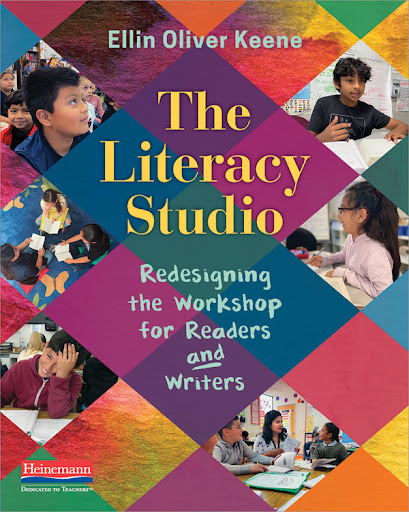 online graduate course affectionately called: Synergy. I can feel my batteries recharging! I love hearing how these teachers are thinking about their own instruction and I yearn for my own classroom! I can see and feel how this studio idea can work.
Consider an artists’ studio. Currently, I am a member of a clay studio. Most of us use the wheel to throw objects both decorative and functional. I do not. I build my art by hand in and amongst these “throwers”. Our process is different, but we learn from each other as we go. Our teacher watches and observes, she confers with us, nudging us to move deeper into our art. I love seeing the forms the “throwers” can make on the wheel. I try out their forms to create new forms for me by hand without the wheel. Our processes have a reciprocal nature inherent to them. At the end of each session we consider what worked and what did not work. Each of us is gaining important artist muscles as we craft our own art.
A literacy studio can be very much like an artists’ studio. We carve out a considerable chunk of time for literacy – both reading and writing. Our focus lessons point out the similarities of the two: How writers use reading and readers use writing to further their work. We give our students real choice, and we support them as learning individuals. Their work has purpose and is as authentic as they can make it be. It matters to me. It matters to them. As a teacher I am no longer holding a reading focus lesson and a writing focus lesson – there is only one. Right away we are adding to our learning time in the studio. No longer do we transition from reading to writing, a gift of more time for the studio! The outcomes are more dramatic and filled out, not hurried and patched together.
This makes so much sense. I still worry as a teacher, how will I keep track of their learning? Will we “get” everything that is required for them? Then, Ellin Oliver Keene, drops in the idea of circular planning! Circular. It is the way my mind works. I am not a straight line kind of artist or teacher. During a cycle there may be more than one focus lesson, more than one work session. Students spend time composing ideas then crafting those ideas. Each planning cycle identifies the learning target (standards), a thinking strategy, and a possible outcome. A cycle can last more than one day. A cycle literally just keeps rolling along!
Now, I am thinking about the teaching moves I offer teachers in classrooms that may help them envision this shift in thinking. I sense that how I “do” business with teachers has taken a course adjustment for the positive for supporting real readers and writers.
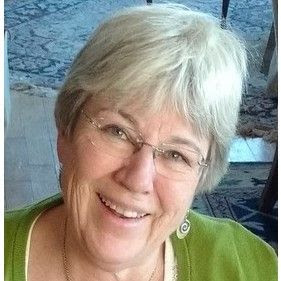
Bio: Ellen A. Thompson, Ed.D., Literacy Consultant
Ellen Thompson has been an educator for over 45 years. She taught as a classroom teacher in Vermont for over twenty years with many of those years in a multiage setting teaching children aged 6-9 years of age. Ellen was named the Vermont State Teacher of the Year in 1993 and she achieved her National Board Certification as an Early Childhood Generalist in 1999. Ellen began consulting nationally in 1993 and has continued this work throughout her years as an educator. Upon leaving the classroom, Ellen joined the Elementary Education literacy faculty at the University of Vermont in 2000. At the University, she taught undergraduate literacy courses, supervised student teachers and also worked as a literacy consultant in two large scale literacy research projects which spanned the grades K-6. For twelve years Ellen worked with the Essex Town School District as the Director of Instruction and Information Services. During this time, Ellen completed her doctoral studies in Educational Leadership and Policy Studies at the University of Vermont in the fall of 2007. After the merging of the Essex Town School District and the Chittenden Central Supervisory Union, Ellen continued working with educators in the newly created Essex Westford School District as the Director of Learning Design. Ellen is currently a literacy consultant for Partnerships in Literacy and Learning.
